
Lex et Libertas
// restoring law and liberty for the agentic era
Law was supposed to enable liberty—to create the conditions under which free people could trade, build, and prosper. Somewhere along the way, law became the enemy of liberty.
We’re restoring the balance.
I.
// corporations are people too
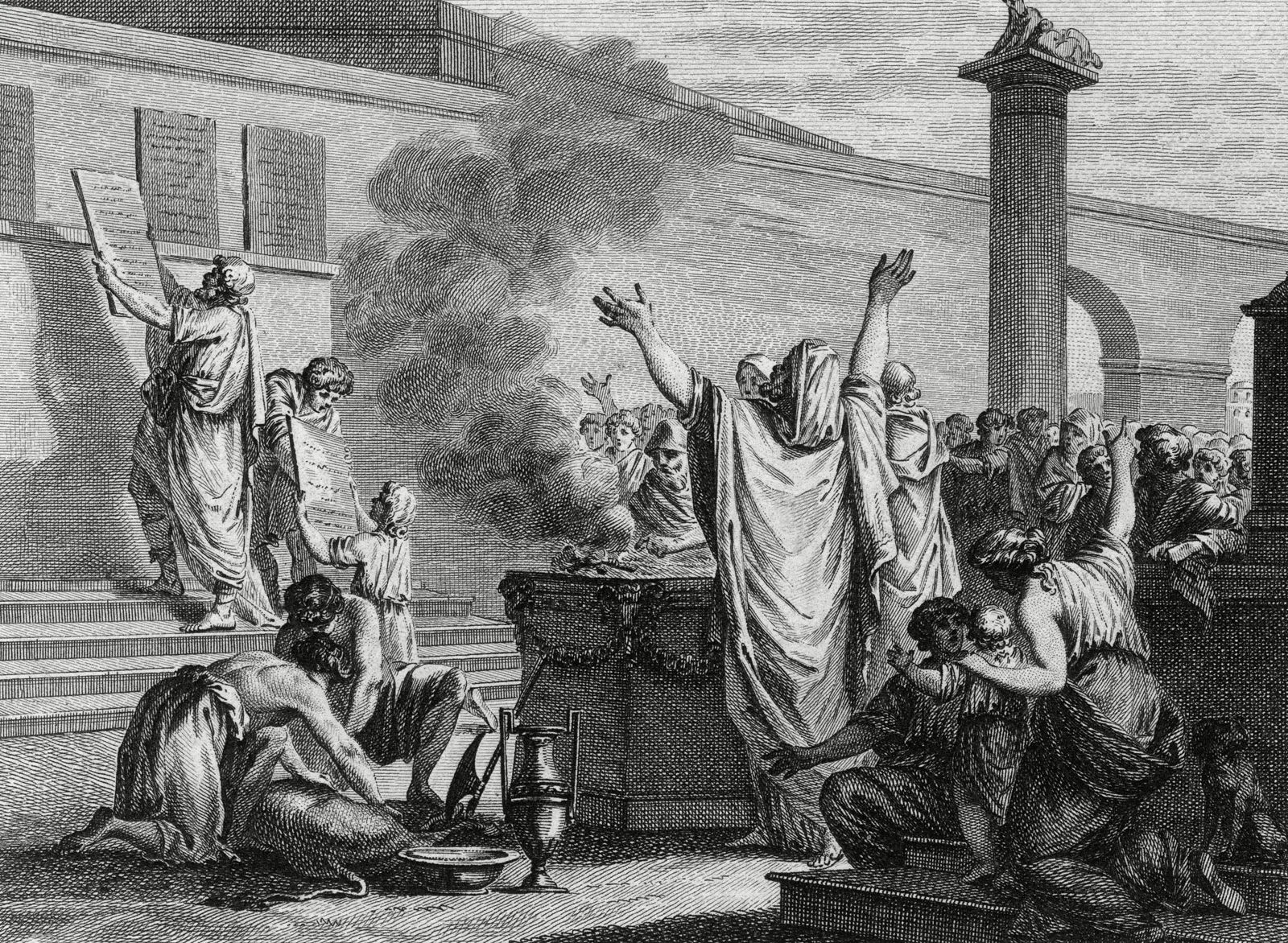
The civilization that invented the corporation is now strangling it.
Two thousand years ago, Roman jurists created something unprecedented in human history: a legal framework that allowed strangers to do business with one another. The jus gentium—the law of nations—didn’t care where you came from, what language you spoke, or which gods you worshipped. It cared about one thing: that a deal was a deal. Pacta sunt servanda. Agreements must be kept.
That single idea—that commerce could be governed by universal, predictable, enforceable rules that bound subject and sovereign alike—is the foundation on which Western civilization built its prosperity.
From Rome came contract law and the societas—the partnership that could outlive its founders. From the medieval Italian city-states came the commenda—the limited partnership that powered Venetian trade across the Mediterranean, structuring risk so that capital could flow to where opportunity lived. From the merchant fairs of Champagne came the lex mercatoria—a body of commercial law created not by kings or parliaments, but by traders themselves, enforced in merchant courts along the great trade routes of Europe.
From these roots grew the joint-stock company, the limited liability corporation, the modern multinational. Every one of these innovations shared a common logic: make it easier to do business, and prosperity follows. Lower the cost of trust, and strangers become partners. Reduce the friction of exchange, and wealth multiplies.
The corporation is, by design, a challenge to centralized power. It creates a locus of authority, capital, and decision-making that exists independent of the state. That is precisely what makes it so productive—and precisely why it has been under siege for as long as it has existed. Every ruler who preferred command to contract—the emperor, the czar, Xi Jinping—has understood the corporation as a rival: a place where authority and capital gather beyond the reach of the throne.
This is the inheritance. Two millennia of legal innovation, each layer expanding the circle of who could participate in voluntary exchange, each layer enshrining the rights of the corporation against state interference.
And we are squandering it.
II.
// a trap for the unwary
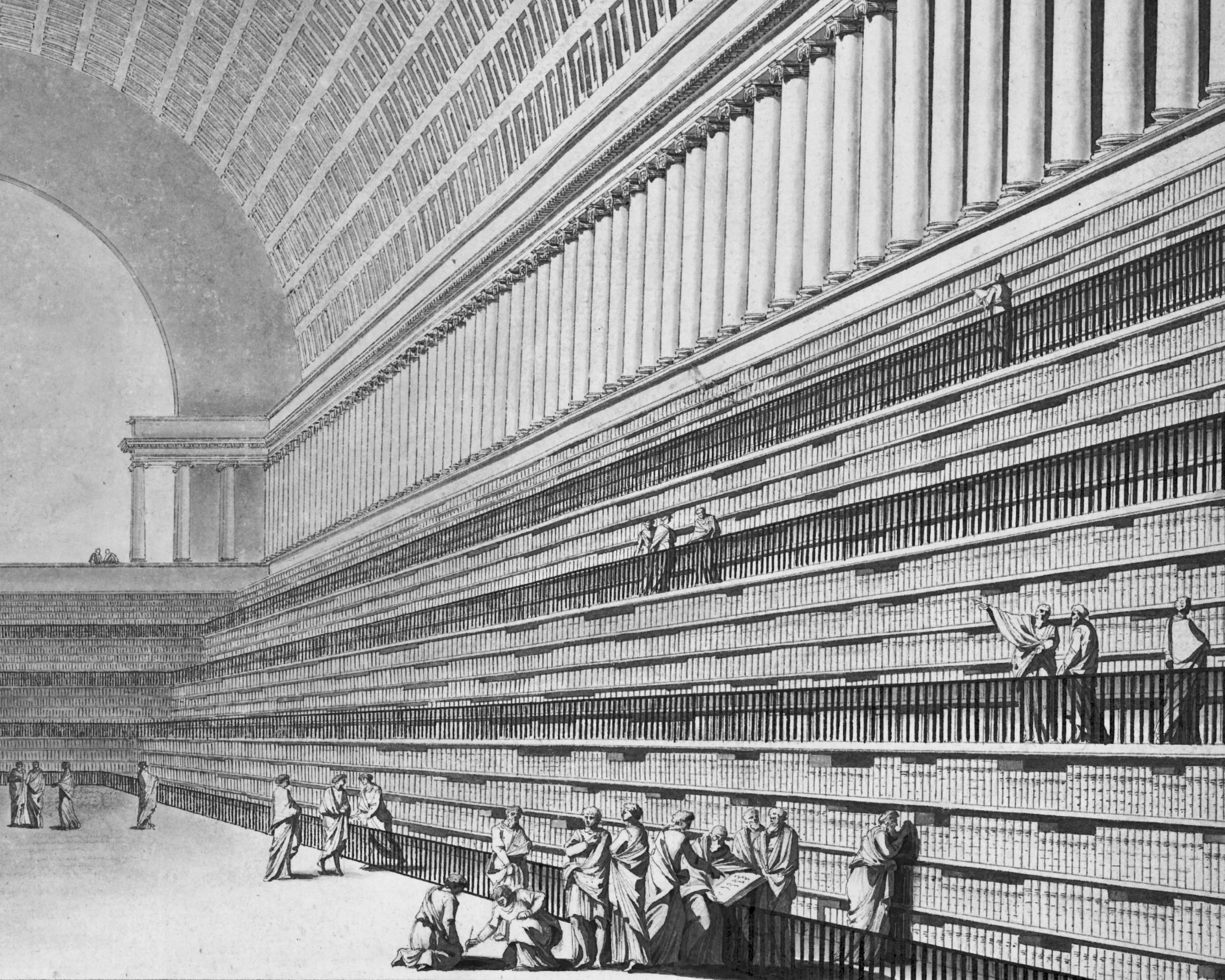
time spent by Americans completing federal paperwork
0hours per year
In 1950, the United States Code of Federal Regulations was 9,745 pages long. Today it exceeds 190,000.1 The rulebook has grown nineteenfold. Americans are not nineteen times richer. Not nineteen times safer. Not nineteen times freer.
Americans now spend 10 billion hours per year completing federal paperwork.2 There are over 5,000 federal statutory crimes on the books, and an estimated 300,000 federal agency regulations that carry criminal sanctions.3 No one—not Congress, not the agencies themselves—knows the exact number.
Justice Neil Gorsuch put it plainly in Over Ruled: we have built a system so vast, so complex, and so riddled with overlapping mandates that full compliance is literally impossible. The law has become a trap for the unwary, enforced selectively and often arbitrarily.4 The sheer size of the rulebook ensures that, as one legal scholar put it, “there is no one in the United States over the age of 18 who cannot be indicted for some federal crime.”5 The result is a system where unelected officials decide by decree who is a criminal—“show me the man and I’ll show you the crime.”
Too Much Law
Total pages in the Code of Federal Regulations, 1950–2024
This is not a partisan observation. The regulatory state has expanded under every administration, of every party, for decades. It is a structural problem—a system that grows by its own logic, impervious to democratic correction.
And that is just one country.
Lines of Obligation
International investment agreements in force worldwide, 1959–2026.
Agreements in 2026
—
Drag to explore agreements by year.
III.
// zoom out

// the average multinational operates
subsidiaries
entities in offshore financial centers
layers of corporate hierarchy
The rules that were meant to enable commerce now prevent it.

The global regulatory landscape is a hall of mirrors.
There are 2,657 bilateral investment agreements in force worldwide.6 383 regional trade agreements.7 Each one was designed to simplify commerce. Together, they have created what the United Nations itself calls a “multiplication of treaty layers”—an overlapping, contradictory web of rules that throttles the very trade it was meant to promote.8
The average large multinational now operates 549 subsidiaries across 56 countries, navigating 7 layers of corporate hierarchy and 68 entities in offshore financial centers.9 These structures exist not because businesses want complexity, but because complexity is the only way to survive in a system that demands it.
The global cost of financial compliance alone is $206 billion per year.10 The average American firm spends between 1.3% and 3.3% of its entire wage bill simply following the rules.11 Banks allocate up to 8.7% of their operating expenses to compliance—not to lending, not to innovation, not to serving customers. To compliance.12 And even then, global fines for non-compliance run into the tens of billions, because the rules are so vast that breaking them is inevitable.
Compliance has become a Sisyphean task. Full adherence is impossible. Enforcement is arbitrary. And the cost falls hardest on the people with the least resources to bear it—the startups, the small businesses, the entrepreneurs in emerging markets who have the ideas but not the legal armies.
We have inverted the logic of our own inheritance. The rules that were meant to enable commerce now prevent it.
IV.
// the return of history
This is not merely an economic problem. It is a civilizational one.

"Capitalism has a moral basis… Unless you have economic freedom, you will have no other freedom at all."
― Margaret Thatcher
The great question of the 21st century is whether free societies can out-innovate, out-build, and out-compete autocratic ones. The answer is not predetermined.
Democracies have a structural advantage. Research published in the Journal of Political Economy shows that countries that transition to democratic governance experience roughly 20% higher GDP per capita over 25 years, driven by greater investment in education, health, and infrastructure.13 Among the most democratic nations, annualized growth rates over half-century spans have never dipped below 2%—a floor that no autocracy can claim. Democracies are more stable, more innovative, and more resilient.
But that advantage is not automatic. It depends on dynamism—the capacity of free people to form companies, take risks, allocate capital, and build things. The democratic edge comes not from central planning but from unleashing millions of individual decisions, each one informed by local knowledge that no bureaucracy could ever possess.
Regulation erodes that edge. Every hour spent on paperwork is an hour not spent building. Every dollar allocated to compliance is a dollar not invested in R&D. Every entrepreneur who looks at the regulatory maze and decides it's not worth the risk is a company that never gets built, a product that never reaches market, a job that never gets created.
Autocracies can direct resources by decree. They can build fast—when they choose the right things to build. But they are brittle: spectacular growth alternating with devastating collapse, variance in outcomes nearly twice that of democratic economies.
The free world's advantage is its anti-fragility: millions of experiments, most failing, some succeeding spectacularly, all governed by rules that make risk calculable and failure survivable. The corporation—the commenda's descendant—is the vehicle for those experiments.
When we bury the corporation under 190,000 pages of regulation or the latest OECD framework, it makes the system more expensive to enforce and harder to navigate—and the people it prices out first are the builders the free world depends on. In the long run, it is not invasion that leads to the collapse of complex societies, but the ossification of our own institutions.14
"When people accept futility and the absurd as normal, the culture is decadent."15
We refuse.

V.
// refactoring global commerce

The instinct to deregulate is understandable but insufficient. Tearing down rules just creates a different kind of chaos. The answer is not less law. It is better technology.
Our contrarian thesis is that regulatory complexity is a feature, not a bug—it means there are healthy laboratories of democracy, that rule-making remains close to the people, and that multiple jurisdictions provide accountability through competition. The problem is not the rules. The problem is that companies go global faster and earlier than ever before and can’t absorb all of them at once.16
The medieval merchants understood this. They did not petition kings for simpler rules. They built their own system—the lex mercatoria, enforced in merchant courts, driven by the needs of trade. We need that again: technology that serves the people who use it, not the bureaucracies that administer it.
AWS did not simplify the underlying physics of web servers. Stripe did not rewrite the complex logic of international payment rails. They built abstraction layers—simple interfaces that absorbed complexity so that builders could focus on building.
Commenda is building the abstraction layer for regulatory complexity. Entity management. Corporate structuring. Compliance across jurisdictions. The plumbing of global business that today requires thousands of hours of manual labor and millions of dollars in professional fees—made simple, automatic, and intelligent.
And for the first time, it is possible. AI agents can now absorb, interpret, and act on the regulatory landscape at a scale no human team ever could. The agentic economy is here. What is not here is the legal framework to support it.
We are at another inflection point in legal history. Wyoming has created the DAO LLC—a new entity type for decentralized autonomous organizations—and three U.S. states now recognize DAOs as legal persons.17 The Fordham Law Review has published frameworks for “law-following AI”: agents designed to bear legal duties without claiming full legal personhood.18 Argentina has gone furthest. President Javier Milei recently proposed a new category in Argentine law—the non-human corporation, an entity operated by AI agents and requiring no human shareholders. Because such systems exercise independent judgment in unpredictable environments, their actions carry real risk; as Milei put it, “limited liability is not a luxury for such entities; it is a precondition for their existence.”19 The European Union, meanwhile, withdrew its AI Liability Directive in 2025, unable to agree on even basic accountability rules for autonomous systems.20
The pattern is familiar. The political class deliberates. The commercial world cannot wait. The accountability gap—who is liable when an autonomous agent acts?—is the single greatest bottleneck to deploying AI at the scale the economy demands. Without clear structures for limiting liability from agent actions, enterprises will not let their agents transact, and the GDP gains from the agentic era will remain theoretical.

06.
// jus agentium

For two thousand years, the infrastructure of commerce assumed a human in the loop. Roman jurists drafted contracts. Venetian merchants kept ledgers. Norman contrerolleurs checked rolls against rolls. Every layer of the system depended on a person, reading and deciding.
That assumption is finally obsolete.
For the first time in history, machines can hold the Code of Federal Regulations in working memory. They can read a Cypriot VAT return at the same time as a Singaporean transfer pricing study and a Delaware annual report. The Sisyphean labor that has consumed the productive class for three generations can be done by something other than a person.
This is ad fontes. Back to the source. The law was meant to be technology for builders, not a profession for the people who guard the gate.
CSC Global was founded in 1899, the year before US Steel, to manage the modern corporation.
Commenda was founded in 2022, the year before ChatGPT, to make the corporation manageable again.
We are building the agentic operating system for global business. Technology for the founder in Tel Aviv incorporating across five countries before her round closes. For the controller in Singapore reconciling the same entity across three systems. Technology that gives AI agents clear legal guardrails, so the people who deploy them can build without fear.
The political class has shown it lacks the will to untangle what it spent decades creating. If you have read this far, you understand that the answer is not coming from Washington or Brussels or Geneva. You understand that law is not a historical artifact—it is a living technology, and the next great legal innovation is waiting to be built.
You must build it.
Help us build technology for the free world.
// help us build the technology for the free world.
// credits
EDITOR-IN-CHIEF
/ Sam Suechting (@samsuechting)
CONCEPT, LEAD DESIGNER
/ Tushar Sudheesh (@tushar_sudheesh)
DESIGNER
/ Devyani Patil (LinkedIn)
DESIGN ENGINEER
/ Adarsh Srivastava (LinkedIn)